Employee engagement isn’t declining because people suddenly stopped caring.
It’s declining because the way work works has changed — and leadership hasn’t always kept pace.
Burnout, disengagement, and quiet withdrawal are often symptoms of deeper issues: lack of clarity, limited ownership, misaligned expectations, and systems that drain energy instead of focusing it.
Engagement isn’t a perk.
It’s a leadership outcome.
Why Engagement Looks Different Today
Traditional engagement strategies relied on incentives, recognition programs, and surface-level morale boosters. Today’s workforce expects more — and rightly so.
Modern employees want:
- Clear purpose and priorities
- Autonomy with accountability
- Trust, transparency, and meaningful contribution
According to Rebecca Mott, Owner and Innovation & Engagement Thought Leader at ReThought LLC, sustainable engagement is built through systems — not slogans:
“Engagement isn’t about motivation hacks. It’s about designing environments where people can do their best work without burning out.”
That’s where Lean, Agile, and coaching principles intersect.
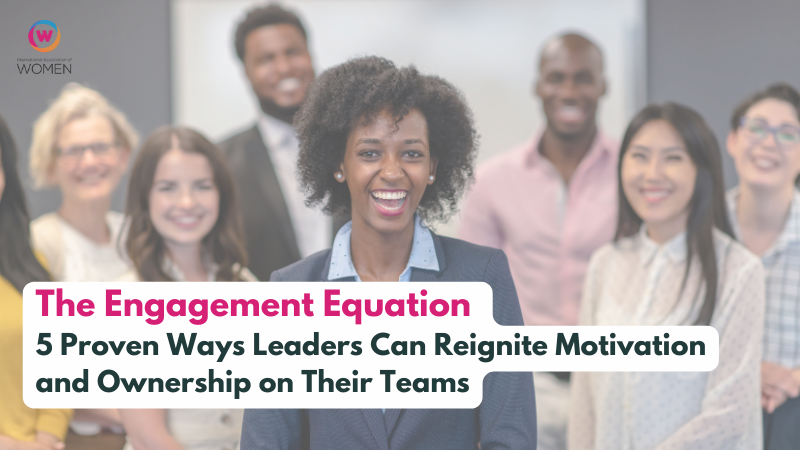
The Engagement Equation: 5 Leadership Shifts That Work
1. Replace Control With Clarity
Disengagement often masquerades as poor performance — when it’s actually confusion.
High-engagement teams have:
- Clear priorities
- Defined success metrics
- Alignment between daily work and broader goals
When people understand why their work matters and what success looks like, ownership naturally increases.
2. Design for Ownership, Not Compliance
Micromanagement kills engagement. Ownership fuels it.
Leaders who foster engagement:
- Set direction, then empower execution
- Invite problem-solving instead of prescribing answers
- Trust teams to iterate and improve
This shift aligns closely with Agile principles, where accountability is shared and progress is visible.
3. Address Burnout at the System Level
Burnout isn’t a resilience problem — it’s a design problem.
Ask:
- Are priorities constantly shifting?
- Are expectations realistic and sustainable?
- Are teams solving the same problems repeatedly?
Lean thinking helps leaders remove friction, reduce waste, and focus energy where it matters most.
4. Coach for Growth, Not Just Results
Coaching conversations create engagement because they signal investment.
Instead of only asking:
- “Did this get done?”
High-engagement leaders also ask:
- “What did you learn?”
- “What would you improve next time?”
- “Where do you need support?”
These questions reinforce growth, autonomy, and trust.
5. Align Expectations With Today’s Reality
The workplace has changed — flexibility, wellbeing, and purpose are no longer “nice to have.”
Engaged leaders:
- Revisit assumptions about productivity
- Adapt communication styles
- Co-create norms with their teams
Engagement increases when expectations are explicit, realistic, and human-centered.
Engagement Is Built — Not Boosted
Motivation doesn’t come from pressure.
Ownership doesn’t come from perks.
Engagement comes from intentional leadership design.
When leaders apply Lean, Agile, and coaching principles together, they create environments where:
- People feel trusted and valued
- Progress feels visible and meaningful
- Teams stay energized — even during change
That’s the real engagement equation.
Learn More
Rebecca Mott partners with leaders and organizations to reimagine engagement through practical, human-centered systems that drive results without burnout. Learn more at rebeccahmott.com.
At IAW, we highlight leadership insights like these to help women lead teams that are motivated, resilient, and ready for what’s next.