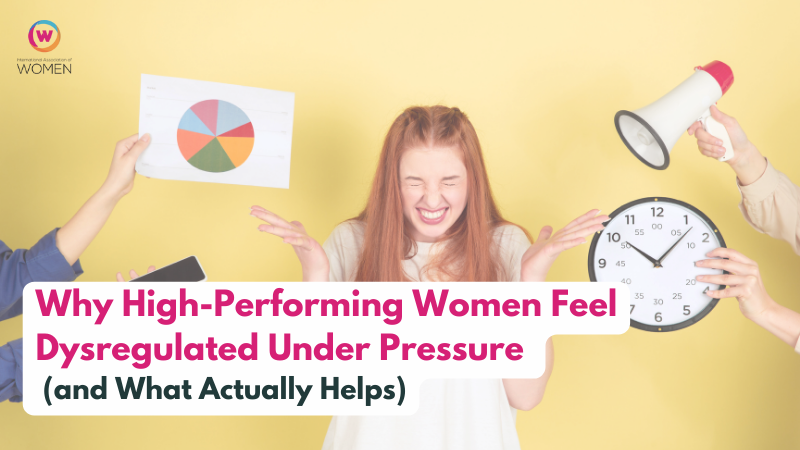
High-performing women are often described as resilient, capable, and composed.
And yet—under sustained pressure—many feel anything but steady.
The tight chest before a meeting.
The racing thoughts late at night.
The sudden irritability, shutdown, or emotional exhaustion that seems to come out of nowhere.
This isn’t a lack of emotional intelligence.
And it’s not a personal failure.
It’s a predictable response to prolonged pressure without sufficient support.
Pressure Doesn’t Break You — It Reveals the Load You’re Carrying
High-performing women are often carrying multiple forms of invisible pressure at once:
- Professional expectations without clear guardrails
- Emotional labor that goes unrecognized
- Constant decision-making with little recovery time
- Internalized standards that leave no room for margin
Over time, the nervous system stops distinguishing between “important” and “urgent.”
Everything begins to feel like a threat.
That’s when regulation starts to slip.
Not because you’re weak—but because your system is overstimulated and under-supported.
Why Women Experience Pressure Differently
Many women are socialized to:
- Anticipate needs before they’re voiced
- Stay composed even when overwhelmed
- Carry responsibility quietly
- Push through discomfort without complaint
This creates a dangerous pattern:
Pressure is absorbed internally instead of released externally.
So instead of stress looking like visible burnout, it often shows up as:
- Emotional volatility
- Mental fog
- Physical tension
- Disconnection from confidence or clarity
And because you’re still “functioning,” it’s easy to tell yourself:
I should be able to handle this.
But regulation isn’t about capability.
It’s about capacity.
What Actually Helps (and What Doesn’t)
Let’s be clear about what doesn’t work long-term:
- Telling yourself to “calm down”
- Pushing harder
- Adding more tools without removing pressure
- Treating regulation as a solo responsibility
What does help is something far less talked about:
emotional command.
Emotional Command ≠ Emotional Control
Emotional command isn’t about suppressing feelings or powering through stress.
It’s about leading yourself through pressure with awareness and intention.
That includes:
- Recognizing when your system is overloaded
- Creating pause before reaction
- Naming what’s actually happening internally
- Designing environments and support that reduce reactivity
In other words, regulation isn’t a mindset shift.
It’s a leadership skill.
And like any leadership skill, it develops best in the presence of:
- Structure
- Language
- Reflection
- Community
Why Support Changes Everything
One of the most overlooked contributors to dysregulation is isolation.
When you’re carrying pressure alone, your nervous system never fully stands down.
There’s no release valve. No shared processing. No recalibration.
But when pressure is acknowledged, named, and supported, something shifts.
Clarity returns.
Breath deepens.
Perspective widens.
Not because the pressure disappears—but because you are no longer holding it by yourself.
Moving Forward With Steadier Leadership
If you’ve been feeling dysregulated under pressure, the answer isn’t to fix yourself.
It’s to:
- Re-evaluate the load you’re carrying
- Build support around high-stakes moments
- Develop emotional command as a practice, not a personality trait
High performance doesn’t require constant tension.
Strong leadership doesn’t require self-sacrifice.
And steadiness isn’t something you’re missing—it’s something that’s built with the right support in place.
Want to explore this conversation further?
We unpack topics like emotional command, leadership under pressure, and sustainable momentum inside IAW through free conversations, reflections, and events. Visit www.iawomen.com to learn more.